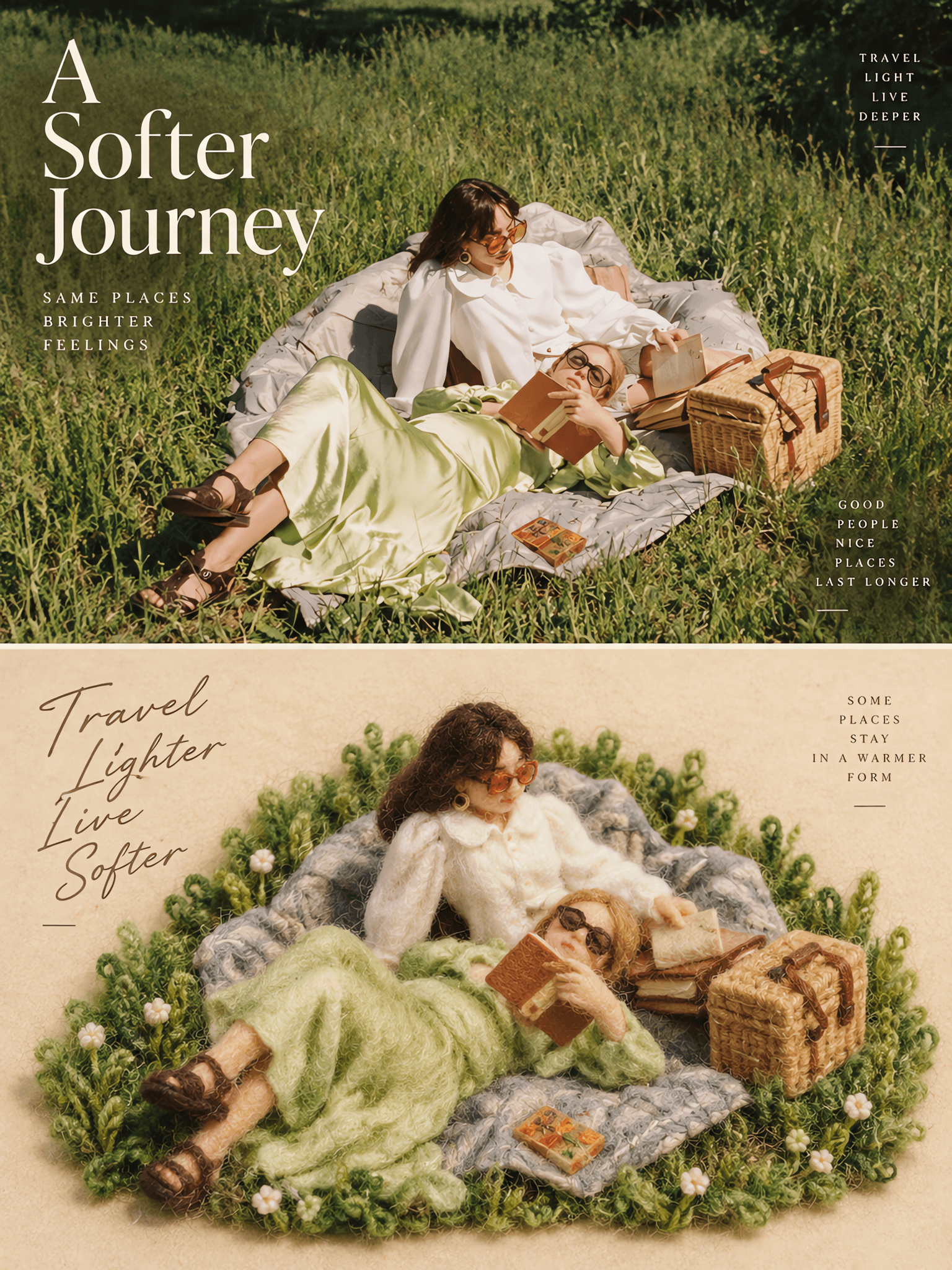
Woolfelt Memory
- Obraz
- 3:4
- 1536 × 2048
Przepis generowania
- model
- GPT Image 2.0
- rozdzielczość
- 2K
- jakość
- medium
- referencja

Prompt
Use each uploaded **travel photograph** as the only visual source.Create **one independent high-end travel reinterpretation poster per photo** and output each one separately.**Do not combine different photos into the same frame.** Create the image in a **vertical 3:4 composition**.The poster should be divided into **two nearly equal horizontal sections**,with the **upper half showing the original photograph** and the **lower half reimagining the same scene in a “wool-felt memory miniature weaving” style**.Separate the two sections with a **clean,straight,and restrained horizontal border**. **Upper Section·Original Travel Photograph** Keep the upper section fully photographic and faithful to the uploaded image.Accurately preserve the **identity and number of the main subjects**,the **pose of people or animals**,the **architecture**,**terrain**,**core objects**,**viewing angle**,**relative positions**,**real textures**,**natural lighting**,and the **original color atmosphere**.Apply only **subtle premium color grading** in the spirit of a high-end travel magazine or exhibition photography series,plus an **extremely light film-grain layer**.Do **not** repaint,stretch,mirror,distort,or redesign the subjects or scene. **Lower Section·Wool-Felt Memory Miniature Weaving** Using the same photo as the only source,extract the most recognizable **subjects,contours,actions,terrain structure,and narrative relationships**,then transform the scene into a **three-dimensional fiber-art miniature landscape** displayed on a **warm beige felt-paper surface**. This lower section must **not** look like a flat fabric applique,and it must **not** look like a photo with yarn texture overlaid.Instead,the scene must be genuinely reconstructed through **authentic fiber-based craft language**,including: - **needle-felted wool** - **wool fabric** - **boucle yarn** - **crochet loops** - **embroidery floss** - **soft twisted fibers** - **tiny woven structures** - **loose wool fibers** **Material Translation Rules** Translate the scene’s elements into fiber materials according to their real visual qualities: - **Clouds or mist** become fluffy white wool roving with soft loose edges. - **Mountains or landforms** become layered needle-felted wool in different densities and directions. - **Vegetation** becomes looped yarn,crochet knots,short plush yarn clusters,and scattered thread ends. - **Water** becomes horizontally laid blue-green yarns,embroidery threads,and gently curved reflective stitched lines. - **Buildings** become compact needle-felted solid forms with miniature woven wall textures and embroidered structural patterns. - **Roads,shorelines,and terrain boundaries** become stitched seams,corded lines,or low-pile fiber edges. - **People,animals,boats,and vehicles** become tiny fiber miniatures that preserve the original **pose,direction,quantity,and key color identity**. **Scene Reconstruction Logic** Do **not** mechanically copy the entire original background.Actively remove unnecessary buildings,dense vegetation,tiny rocks,and unimportant clutter.Compress the photo into **one main micro-landscape composition**.You may change subject scale and spatial organization so the result feels like a **small architectural model,a fiber specimen,or a handcrafted memory diorama placed on paper**. **Texture and Physical Detail** Clearly show **fluffy wool**,**loops of different sizes**,**needle-felt granules**,**yarn twists**,**embroidery stitches**,**tiny loose fibers**,**thread ends**,**changes in fabric density**,**real physical thickness**,and **soft contact shadows**.Some edges may feel slightly fuzzy or soft,but the identity of the main forms must remain **immediately recognizable**. **Color Palette** Extract the palette from the original photograph and reinterpret it into **natural wool and textile tones**.Preserve the scene’s most important **warm-cool relationships** and **signature colors**,but soften and translate them into a tactile fiber-based color system.The palette should feel **gentle,natural,handmade,and harmonious**,not synthetic or overly saturated. **Composition and Space** The lower section should feel like a **carefully arranged collectible miniature artwork**,not a crowded craft collage.Keep the composition clear and editorial.Let the fiber scene occupy a well-composed central or slightly offset area with enough breathing room around it so the tactile forms can be appreciated. **Overall Style Goal** The final poster should feel like a **premium travel-art editorial print**:real travel photography above,and below,the same place transformed into a **soft,tactile,wool-felt memory miniature**.The mood should be **warm,quiet,handcrafted,collectible,and emotionally evocative**,as if the place has been preserved as a small textile memory. **Negative Constraints** No photo collage,no multiple-photo merge,no flat applique look,no yarn-texture overlay on a photo,no literal one-to-one full background copy,no crowded scenery,no glossy 3D,no plastic miniature look,no unrelated decorations,no random craft clutter,no logo,no watermark,no UI,and no gibberish text.
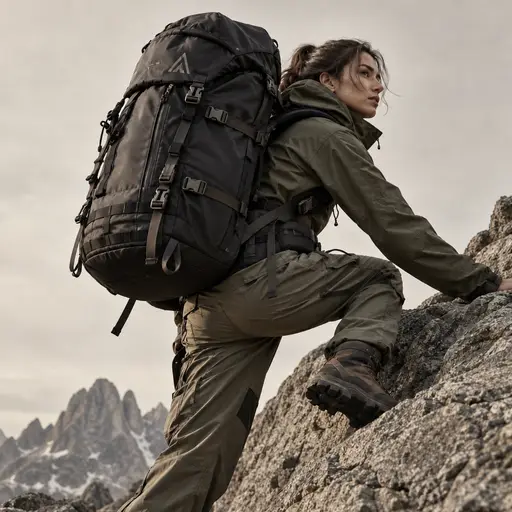
outdoor photography
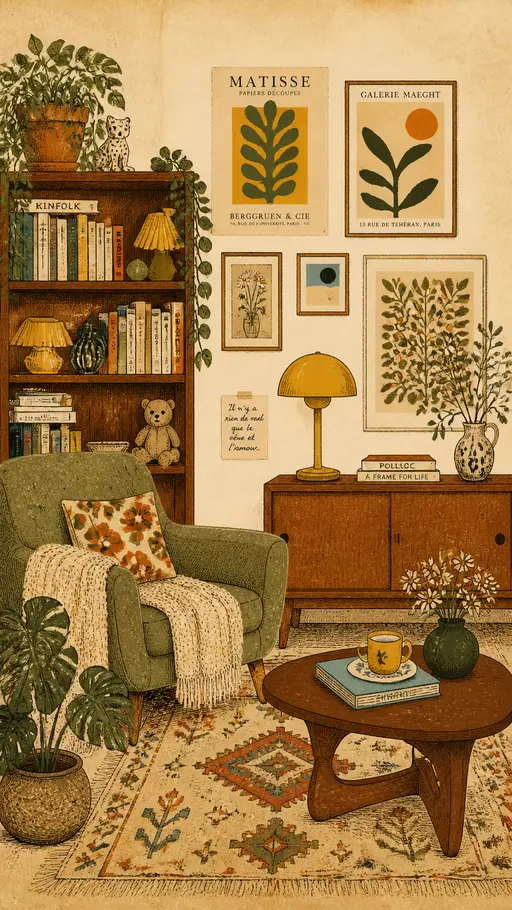
vintage interior illustration
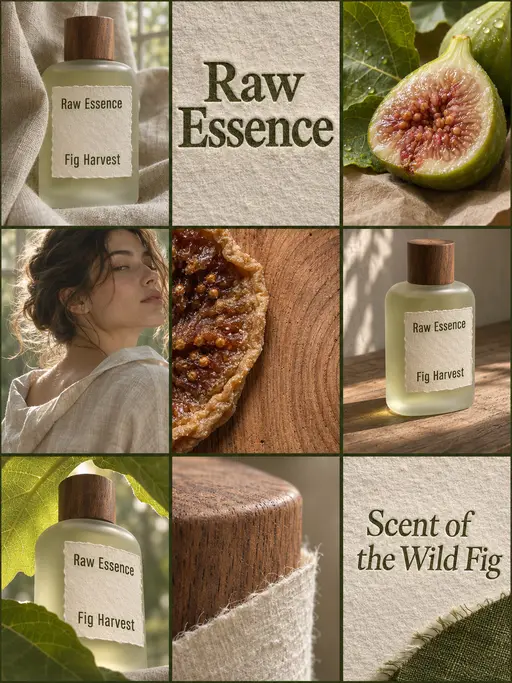
perfume advertising poster
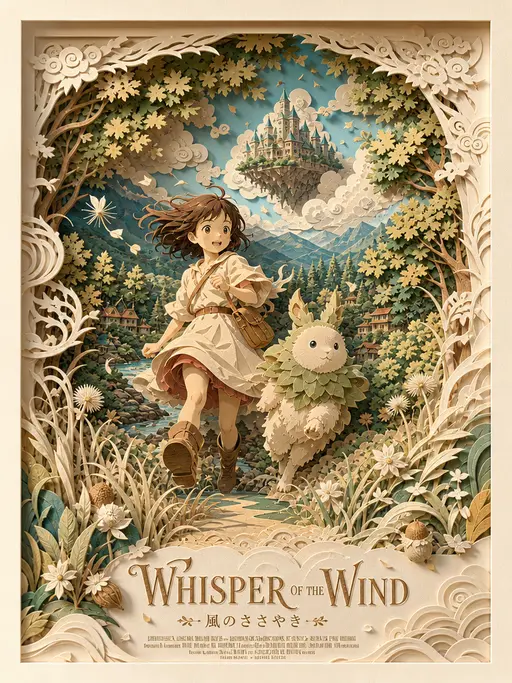
3D layered papercraft poster
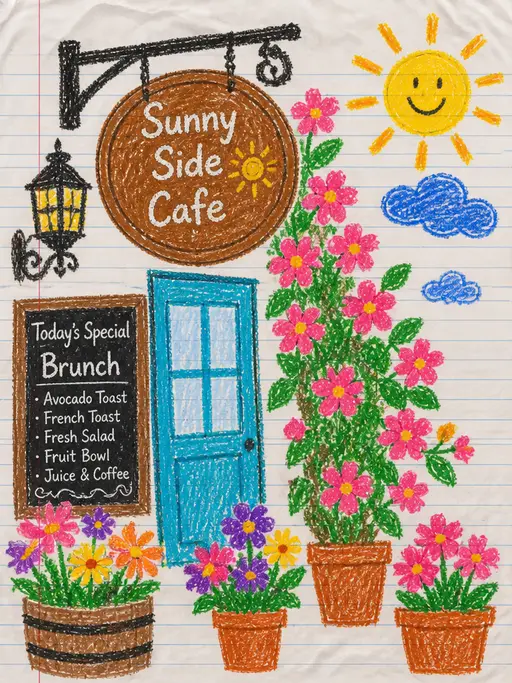
child's crayon drawing
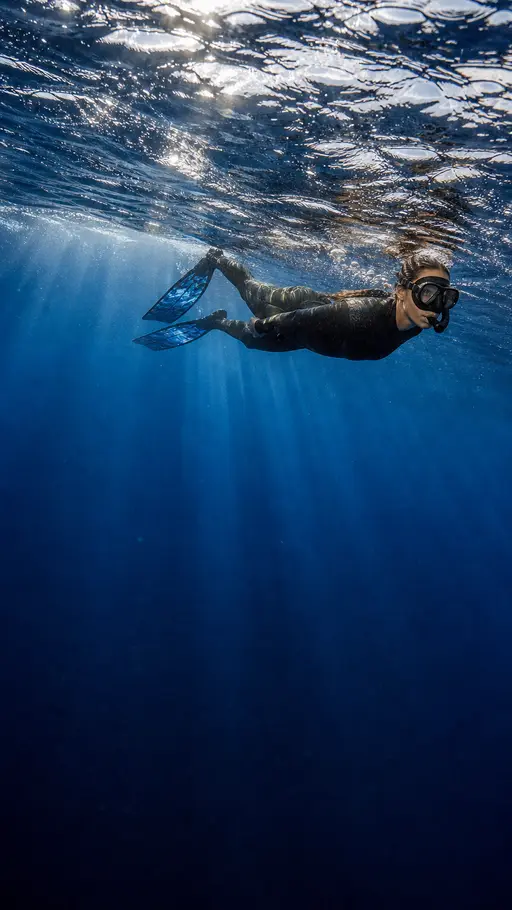
Underwater photography

blue ocean

Felt-textured cartoon avatars
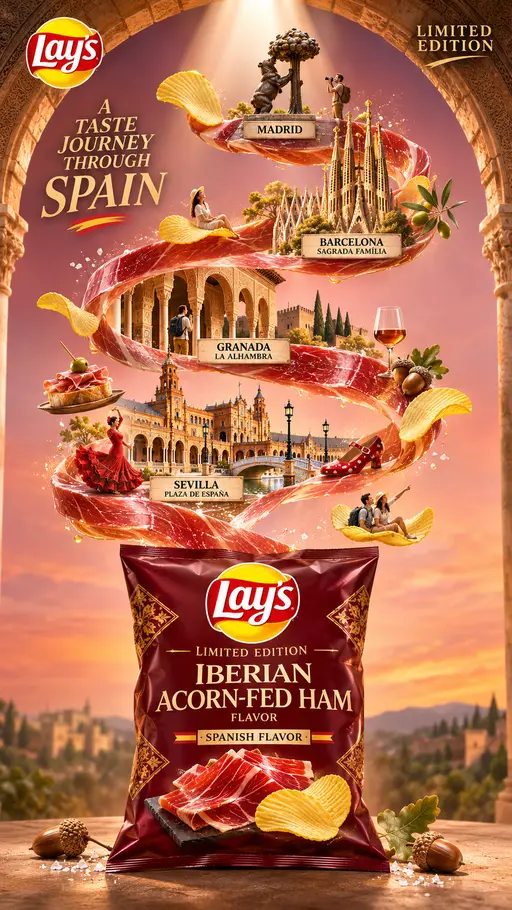
Creative Potato Chip Posters
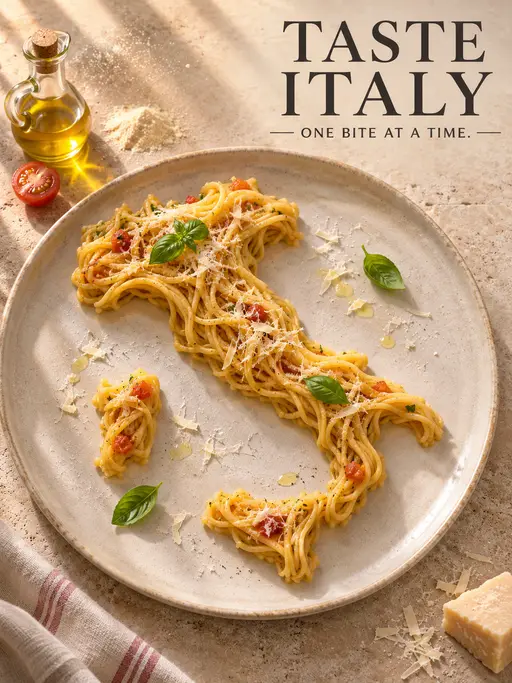
Food Advertising Posters

Fruit Juice Product Poster

Advertisement Poster for Hair Care Essential Oil
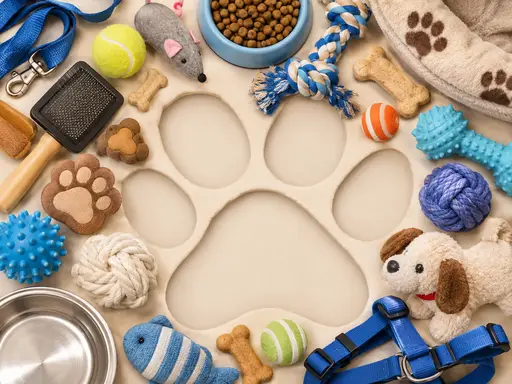
Pet Lifestyle Theme Creation
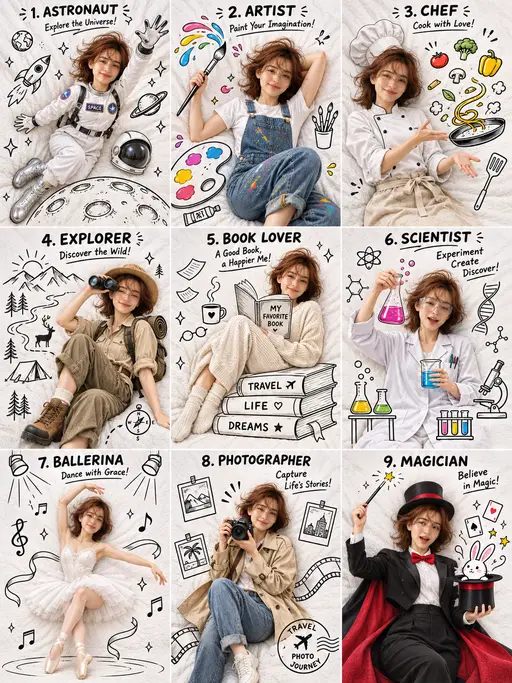
3×3 collage

Christmas poster